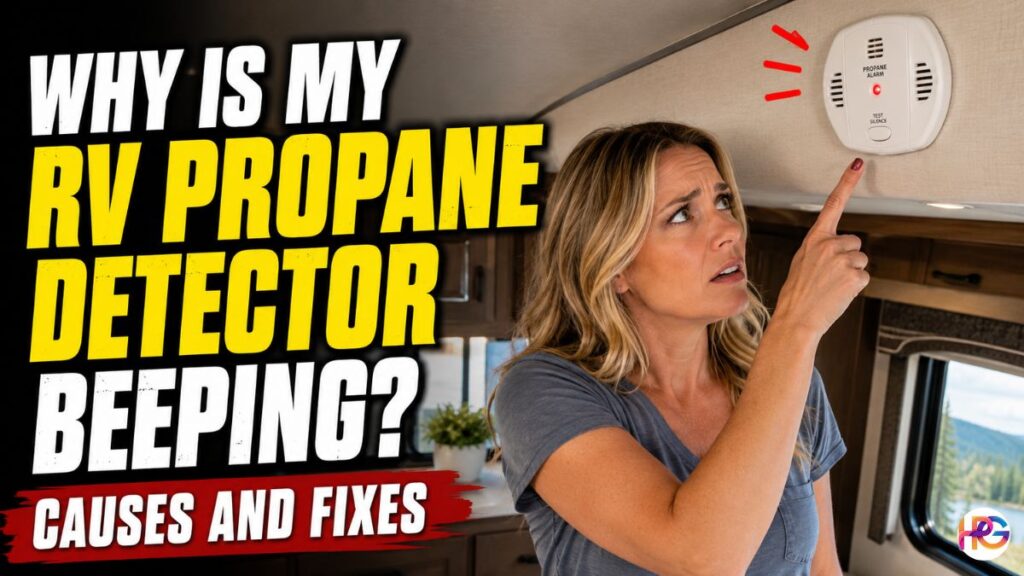
Why Is My RV Propane Detector Beeping? Causes and Fixes
It was three in the morning during our family trip to a campground just outside Austin, Texas. A sharp, loud sound woke me up. My ears were ringing, and my first thought was a gas leak. Heart racing, I grabbed a flashlight and rushed to check on my kid. We all rushed outside into the cool night air. After a careful check, there was no smell of gas. The tanks were shut off. Yet, the little plastic box on the wall kept making that awful sound.
That night taught me a lot about these tiny lifesavers. When your RV propane detector starts to beep, it is easy to panic. But over the years, I have learned that this device has its own language. It is often just trying to tell you about a bad battery, a dusty sensor, or an old-age crisis. Let us look at why your detector is making noise and how you can fix it fast.
What Is Your RV Propane Detector Trying to Tell You?
An RV propane detector is a smart tool. It sits close to the floor because propane gas is heavy. Propane sinks to the ground when it leaks. The tool uses a special sensor to check the air. But it does not just sound for real gas. It also acts as a guard for your electrical system.
When it makes a sound, you must look at the lights on the face of the unit. The colors will tell you the exact problem.
Decoding the Light Patterns
Every major brand uses a simple light code. You can find these lights on the front plate of the device.
| Light Color | Sound Pattern | What It Means |
| Solid Green | No Sound | The unit is on and safe |
| Flashing Red | Loud Continuous Alarm | Dangerous gas is in the air |
| Flashing Amber | One Chirp Every Minute | Your battery voltage is too low |
| Red and Green | Alternating Chirp | The sensor has reached old age |
The Dangerous Threat of Real Propane Leaks
We must start with the most vital point. A continuous alarm means danger. If the sound does not stop, treat it as a real leak.
Propane has a bad smell added to it. It smells like rotten eggs. If you smell this, leave the camper right away.
Common Places Where Gas Leaks Happen
Gas lines can shake loose when you drive down bumpy roads. The main stove knobs can get bumped by accident.
Sometimes, a line behind your fridge or water heater can crack. I always keep a small spray bottle of soapy water in my tool kit. You can spray this mix on the gas joints. If you see bubbles grow, you have a real leak.
Other Hidden Gases That Trigger the Alarm
The sensor inside the unit is sensitive to many things. It does not just react to propane. It reacts to other chemical vapors too.
I once set off my alarm by using a strong spray cleaner right next to it. Hair spray, spray paint, and even sewer gas from an empty grey water tank can trip the sensor. If you have a large dog sleeping right by the detector, their gas can cause a false alarm too.
Low Battery Voltage Is the Main Culprit
If your device makes a single chirp every thirty seconds, you likely have a low battery. This is the most common issue I see.
Most people think these units run on small nine-volt batteries like a house smoke alarm. They do not. They are wired right into your RV twelve-volt house battery system.
How a Weak House Battery Causes False Alarms
When you camp without power hooks, your coach battery drains. If the power drops below ten and a half volts, the detector will chirp. It does this to warn you that it can no longer monitor the air safely.
It is a safety feature, but it can be incredibly frustrating at night.
How to Check and Fix Your Power Supply
You need to check your battery monitor panel. If you are boondocking, run your generator for a bit. You can also plug the rig into shore power.
Once the battery gets a good charge, the chirping will stop on its own. If your RV sits in storage for a long time, the detector will slowly drain the battery. This is called a vampire draw. I always use a battery disconnect switch when my rig is parked for the winter.
Dust and Pet Hair Create False Alarms
Take a look at where your detector sits. It is usually just two inches off the floor.
Think about all the dirt, dog hair, and boot tracks that pass by that spot every single day. The unit is a magnet for floor dust.
Why Dust Blindfolds the Sensor
The sensor needs clean air to flow through its front vents. When pet hair or lint covers those slots, the internal sensor gets hot.
This heat creates an error in the circuit. The device thinks there is gas in the air, so it sounds the alarm.
The Right Way to Clean the Vents
Never spray liquid cleaners into the unit to clean it. That will ruin the internal parts.
Instead, grab a can of compressed air. Blow the dust out of the small cracks. You can also use the brush tool on your vacuum cleaner. I do this once a month now, and it saves me from a lot of false alarms.
The Secret Trap of Moisture and High Humidity
High humidity can play major tricks on your electronic gear. RVs are small spaces that trap wet air quickly.
When you cook or take a hot shower, steam fills the cabin.
How Wet Air Fools the Electronics
On a rainy morning, moisture can settle on the cold circuit board of the detector. This wet layer can mimic a gas leak by changing how electricity flows through the sensor.
I experienced this during a damp weekend trip. The air was thick, and the walls were sweating. The alarm kept going off for no clear reason.
Easy Solutions to Dry Out the Sensor
You need to move the air inside your camper. Turn on your roof vent fans or run your air conditioner.
If you just washed the floor near the unit, wipe up any leftover water pools. You can use a small hair dryer on a cool setting to blow-dry the face of the detector. Once the air dries out, the unit will return to its normal green light.
The Expiration Date You Cannot Avoid
Many owners do not know that these safety devices do not last forever. They have a hard life limit.
The sensor materials wear out from constant exposure to the air.
The Five-Year Life Limit Explained
Almost every RV propane detector is built to last between five and seven years. After that time, the internal chip triggers an end-of-life signal.
This is a specific chirp that you cannot turn off with a button. It tells you that the unit is no longer safe to use.
How to Check the Age of Your Unit
You need to remove the two screws that hold the plastic face to the wall. Pull the unit out and look at the back side. You will see a stamped date of manufacture.
If that date is more than five years old, you need a new unit. Do not try to clean it or bypass it. You can buy a replacement online or at an RV store. It takes just two wires to install a new one.
Step-by-Step Reset Procedures
When your unit goes off and you know the air is safe, you can try to reset the system. Follow these steps to clear out temporary errors.
Use the Test and Mute Button
Press the button on the front of the device. This will mute the loud horn for about ninety seconds. This quiet window gives you time to open the windows and clear out any smoke or cooking fumes.
Perform a Full Power Cycle
If the unit stays stuck with an error light, you need to cut the power completely.
Find your main RV fuse box. Pull the fuse for the propane detector. Leave it out for one full minute. This lets the electrical system drain completely.
Pop the fuse back in place. The unit should beep once, flash its lights, and then show a solid green light. If it goes back to red or amber, you have an issue with your battery or the sensor itself. Take your time to check each step, and you will keep your trips safe and quiet.
Frequently Asked Questions
How do I stop my MTI Industries RV propane detector from beeping?
First, check for a real gas leak by smelling the floor area. If the air is safe, clean the sensor vents with compressed air and charge your 12-volt house battery.
Can a dead house battery trigger an RV propane detector alarm?
Yes, a weak battery is the top cause of false alarms. When your 12V power drops below 11 volts, the device chirps to warn you that the safety sensor is losing power.
How many years does an Atwood RV propane detector last before replacement?
These life-saving tools last exactly five to seven years. After this limit, an internal clock triggers a permanent end-of-life chirp that means you must buy a new unit.
Will dust or dog hair set off my camper gas leak sensor?
Floor dust and pet hair frequently clog the small sensor vents. This traps heat inside the device, tricks the circuit, and triggers a loud, annoying false alarm.
Can I use household spray cleaners near my RV propane detector?
Never use aerosol sprays or harsh chemical cleaners near the tool. The sensitive internal sensor detects these chemical vapors as explosive gas and will sound the alarm.
Read More: RV Propane Gas Detector Replacement