How Does a Combustible Gas Sniffer Work? (And Why You Need One)
I smell gas in my cold Chicago home. I grab my Klein combustible gas sniffer fast. Quick beeps find the leak. Let us find the best, tough tool for the cold Midwest.
The Magic Inside: How Does a Combustible Gas Detector Work?
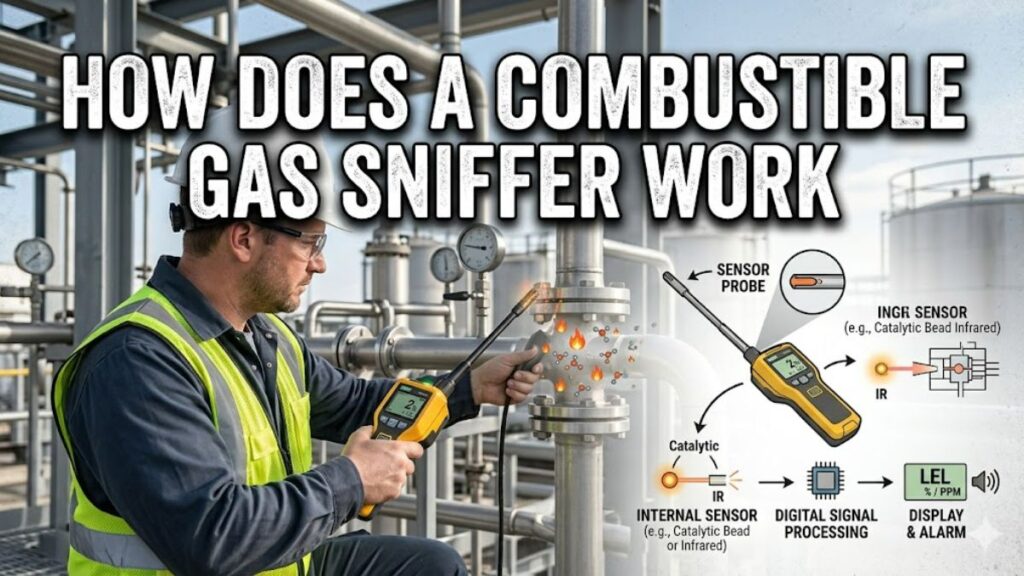
Have you ever looked at your combustible gas sniffer and wondered what it actually does? It is basically a tiny chemistry lab working in real-time right inside your hand.
The Catalytic Bead Sensor (The Tiny Wire Method)
I use this type the most. Inside the tip of the wand, there is a very small wire coil. This wire is coated in a special metal, usually platinum. When a gas leak hits that tip, the wire actually burns the gas on a microscopic level. This tiny fire makes the wire hotter. The heat changes the electrical flow, and that makes the alarm scream at you. I can almost feel that tiny heat spike inside the tool when I am holding it tight in my freezing garage on a cold Monday in Detroit. It is wild to think a tiny, invisible fire is keeping my house from blowing up!
Infrared Sensors (The Optical Approach)
Some detectors use light instead of heat. This is the infrared approach. The sensor shoots a tiny light beam inside itself. Combustible gas absorbs certain light waves. It acts like a fog blocking a headlight. It stops some of that light from crossing the gap. If the sensor sees less light hitting its target, it knows gas is in the air. These are great if you are in a tight, low-oxygen spot where the tiny wire method might fail. You do not need fresh air to shine a light.
How Do 4 Gas Monitors Work?
My little yellow sniffer is great for my home DIY jobs. But pros need more power. That is where 4 gas monitors come in. These are heavy-duty bricks used on big job sites. So, how do 4 gas monitors work? These detectors check for four hazards at the same time: oxygen levels, carbon monoxide, hydrogen sulfide, and combustible gases. Inside the tough outer shell, both optical and chemical sensors work together to keep readings accurate. It is overkill for checking my home furnace, but it is a true lifesaver in a deep, dirty trench.
Cracking the Code: LEL Explained in Plain English
You will see the letters “LEL” on most manuals. What does it mean? Knowing this can save your life. It can also save your eyebrows. I read my manual on a hot July day in Texas. The heat made me sweat. The scary warnings gave me cold chills.
What is LEL? (Lower Explosive Limit)
LEL stands for Lower Explosive Limit. It is the lowest amount of gas in the air that can catch fire. You must have a spark to light it. Think of making a campfire. Too little wood means no fire. If the gas is below 100 percent LEL, the air is too lean. It will not burn at all.
What Does 20% LEL Mean vs. What is 10% of LEL?
Let us look at the numbers. Remember that 100 percent LEL is boom time. You do not want that.
- What is 10% of LEL? This is your early warning bell. Your combustible gas sniffer senses you are one-tenth of the way to a blast. My pulse always jumps when I hear that beep.
- What Does 20% LEL Mean? This is the red danger zone. Big alarms lock down at this point. If you see this, drop your tools. Run outside fast.
Is 10% LEL Explosive?
No, it is not. A 10 percent LEL reading gives you a safe buffer. You are only ten percent of the way to a fire. But do not relax. Gas is leaking out fast. When I see this number, I hold my breath. I reach out and shut off the main gas valve.
What is LEL in the UK?
Gas acts the same all over the world. Physics stay the same. But the rules change. The UK uses strict ATEX rules and HSE guides. The LEL numbers mean the exact same thing. But UK laws set strict limits for work alarms. They do not joke about safety.
The Math Nobody Likes: PPM to LEL Conversions
I hate doing math when I am just trying to fix my gas oven. But you need to read the screen on your combustible gas sniffer. You must know what those numbers mean to stay safe.
What is 10000 ppm in LEL?
Let us start with the basics. One percent volume of any gas equals 10,000 parts per million. We call that ppm. So, what is 10000 ppm in LEL? It depends on the gas. For methane, the danger zone starts at five percent volume. That means a reading of 50,000 ppm is a full 100 percent LEL.
What is 5% LEL in ppm?
Now, let us break this down a bit more. What is 5% LEL in ppm? If 100 percent LEL for methane is 50,000 ppm, we just do simple math. Five percent of that whole amount is 2,500 ppm. Honestly, this gets so confusing fast. Last summer, I stood in my hot, dusty garage in Phoenix trying to figure out this exact problem. Eventually, I wrote the math on a strip of rough masking tape and slapped it onto my toolbox lid so I would not forget it again.
What is 2.5% Methane in LEL?
Let us do one more quick test. What is 2.5% methane in LEL? Methane gets highly explosive at five percent volume in the air. So, if the air around you is 2.5 percent methane by volume, you are exactly halfway to a boom. That makes it exactly 50 percent LEL. It makes my hands sweat a little just thinking about it.
Hands-On: How to Test a Combustible Gas Detector
I never just trust a blinking green light. That is a bad idea. I always test my combustible gas sniffer before I start a repair. I was fixing a gas pipe on a windy Tuesday in Denver. The cold air made my hands shake a little. I wanted to be one hundred percent sure my tool worked right. Here is how to test a combustible gas detector safely.
Actionable Steps for Bump Testing
- Read the manual first: Every sniffer is different. Mine takes a full minute to warm up. I watch the screen and wait patiently.
- The butane lighter trick: Go outside to test. I use a cheap, unlit butane lighter. I press the button to let a tiny bit of gas hiss out. I hold it right near the sensor probe for just one second. Please, do not light the actual flame!
- Listen for the reaction: The unit should start to tick much faster. Then it will beep wildly. The sound is very sharp and loud. I always smile a little when I hear it. It means my tool works.
- Clear the air: I wave the wand in the fresh, cold air. I swing it around like a magic wand until it fully resets to zero.
- Pro advice: I only do home repairs. Real pros use actual calibration gas cylinders to test their gear. They never use a simple pocket lighter to check a 4-gas monitor.
The Bigger Picture: Integrating Sniffers with Fire Safety Systems
A handheld combustible gas sniffer is great. I use mine to check the pipes behind my warm stove. But it cannot protect you when you sleep. You need a fully automated system. I learned this while staying at a big hotel in rainy Seattle last fall. The lobby had a huge fire safety panel glowing red. It made me feel very safe and a little sleepy.
What are L1, L2, L3, and L4 fire alarm systems?
These are standard safety grades. You see these strict rules a lot in the UK. But the smart ideas work here at home, too. Let us break down the types.
- L1 (Life Protection): Sensors go in every single room. It gives you total coverage.
- L2: Sensors go in high-risk spots. Think of a hot, loud boiler room where gas leaks happen fast. They also protect the main escape routes.
- L3: These protect the escape routes. They also cover any room that opens right onto that clear path.
- L4: These only cover the escape paths. That means just the long hallways and tall stairwells.
Fixed gas sensors in an L1 or L2 system are amazing. They work just like your little handheld sniffer. But they do not need you to hold them. They never sleep. If they smell a bad leak, they act fast. They shut off the main gas valves all by themselves. They even call the fire trucks for you. That gives me real peace of mind when I close my eyes at night.
Frequently Asked Questions
Q: How do you use a combustible gas sniffer?
A: Turn the tool on in fresh air. Let it warm up fully. Move the sensor tip slowly near pipe joints. It will beep fast if it finds a leak.
Q: What gases can a gas leak detector find?
A: A standard home detector finds methane and propane. It can also spot butane or natural gas. It smells the hazards that you might miss.
Q: Are portable gas sniffing tools accurate?
A: Yes, they are very accurate. They find tiny leaks fast. Just make sure to change the batteries. Test the sensor often to stay safe.
Q: Why does my gas sniffer beep in fresh air?
A: It may need to warm up longer. Low batteries can also cause false alarms. Move to clean air and reset the tool to clear the screen.
Q: Can a home gas sniffer detect carbon monoxide?
A: No, standard sniffers only check for explosive gas. You need a separate carbon monoxide tool for that. Protect your home from both dangers.