My Weekend Battle with a Lawn Mower Belt: A True Story and Guide
Last Saturday morning started with a simple goal. I wanted to cut my overgrown grass before the hot Ohio sun reached my yard. After rolling my trusty riding mower out of the shed, I turned the key and got ready to start mowing. The engine roared to life. But when I engaged the blades, I heard a loud screech. Then, nothing happened. The blades did not turn. A thin wisp of gray smoke rose from under the deck. I knew right then that my day had changed. My lawn mower belt was dead.
I am not a pro mechanic. I am just a homeowner who likes to fix things. This guide comes from my own sweat, a few scraped knuckles, and a lot of trial and error. If your mower is sitting dead in your yard right now, do not panic. A complete Lawn Mower Belt Replacement is easier than you think, so let us fix it together.
The Mystery of the Hidden Belt Numbers
After I dragged the mower to my flat driveway, I had to find a new part. This is where most people get stuck. You cannot just buy any random piece of rubber. You need the exact match for your specific machine.
I crawled onto the grass to look under the deck. The old belt was still there, but it was torn into two pieces. I wiped away the black grease and grass clippings to find the stamped numbers.
Decoding the Belt Codes
Lawn mower belts use special codes that tell you their size. If you can read these codes, you will save a trip to the store. Most brands use a simple system of letters and numbers.
Here is what those strange codes actually mean:
| Code Type | What It Looks Like | What It Means | Best Use |
| Fractional | 4L690 | 1/2 inch wide and 69 inches long | Standard mower decks |
| Classic | A68 | 1/2 inch wide and 70 inches long | Heavy-duty belts |
| Commercial | 5L800 | 5/8 inch wide and 80 inches long | Large zero-turn decks |
My Big Mistake at the Store
I drove down to the local hardware store. I saw a cheap automotive belt that looked like it might fit. It was the right length, so I bought it to save five dollars. That was a huge mistake.
Car belts are made for straight runs. They do not like the sharp twists of a mower deck. My cheap choice snapped in just ten minutes.
Always look for a lawn mower belt made with Kevlar cords. Kevlar can handle the high heat and heavy stress. It costs a bit more, but it lasts for years.
Mapping the Maze of Deck Pulleys
Once I had the right Kevlar belt, I faced the next big test. I had to figure out how to route it. A mower deck looks like a maze of metal wheels. These wheels are called pulleys.
If you put the belt on wrong, your blades might spin backward. Or worse, the belt will burn up the moment you start the engine.
Take a Quick Phone Photo First
Before you pull the old belt off, take out your phone. Snap three or four pictures of the deck from different angles. Look for the small sticker on the deck. Most mowers have a handy diagram printed right there.
Mine was covered in mud and rust, so my phone photos saved the day. If your sticker is missing, you can look up your model number online to find the exact map.
The Two Types of Wheels
You will see two kinds of pulleys under your mower. You must know the difference to get the fit right.
- Grooved Pulleys: These wheels have a deep V-shape. They connect directly to your blades. The sharp, narrow side of your V-belt must sit deep inside these grooves.
- Flat Pulleys: These wheels have smooth, flat edges. They are idler wheels that push against the belt to keep it tight. The flat outer backside of your belt runs against these wheels.
Step by Step to Loop a New Belt
Let us get to work on the actual repair. You do not need fancy tools for this job. I used a basic socket set, a long screwdriver, and a pair of thick work gloves.
The gloves are very important. The metal edges under a mower deck can be as sharp as knives.
Step 1: Safe Prep
Safety is the most important part of any DIY project. First, park your mower on flat ground. Set the parking brake so it cannot roll.
Next, lift the hood and pull the wire off the spark plug. This step stops the engine from starting by accident while your hands are near the blades.
Finally, move the deck lever to its lowest possible setting. This gives your arms more room to work.
Step 2: Remove the Guards
Most decks have plastic or metal covers over the outer wheels. These guards keep sticks and rocks out. Use your wrench to remove the small bolts holding them down.
Put the bolts in a small cup so they do not roll away into the grass. My yard has swallowed too many screws over the years.
Step 3: Release the Spring Tension
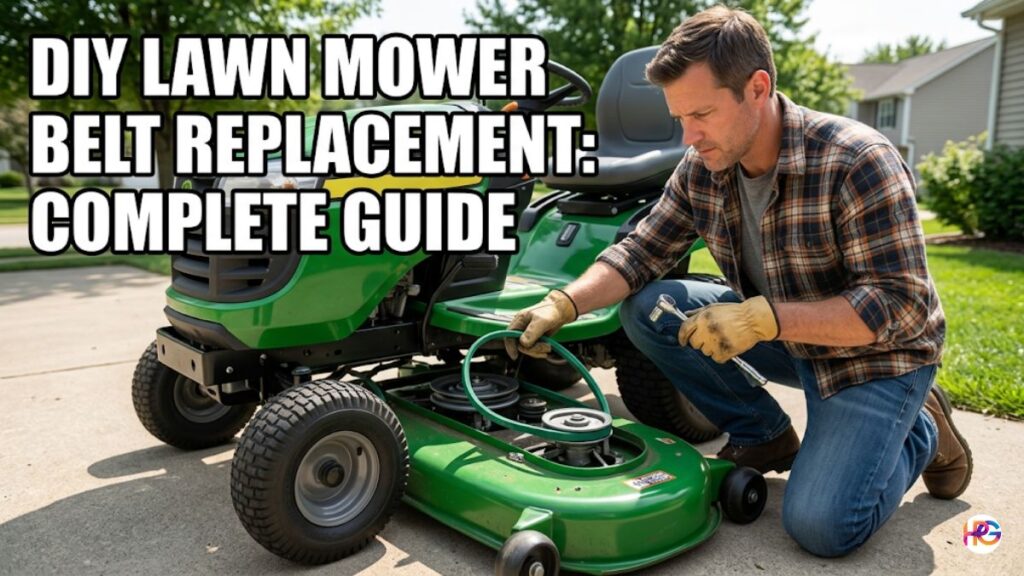
You cannot just pry a belt onto the wheels. It is too tight. You need to find the tensioner arm. This is a metal bar connected to a heavy steel spring.
Take a long screwdriver or a pry bar. Hook it onto the arm and pull it back. This action moves the idler wheel and creates lots of slack.
Slip the old belt off the flat idler wheel first. Once that wheel is free, the whole system will go limp.
Step 4: Clean the Grooves
Do not rush to put the new part on just yet. Take a flat screwdriver and scrape out the old grass packed inside the wheel grooves.
Spin each wheel with your hand. They should spin fast and quietly. If a wheel feels rough or makes a clicking sound, the bearing is bad. You will need to replace that wheel, too.
Mine spun smoothly, so I moved to the next step.
Step 5: Loop the New Belt
Start at the back of the mower. Loop the new belt around the engine drive pulley first. This wheel sits directly under the seat.
Next, guide the belt forward to the deck. Feed it around the outer blade pulleys. Make sure the V-shape drops right into the grooves.
Finally, pull the tensioner arm back one more time. Slip the flat backside of the belt over the smooth idler wheel. Let go of the arm slowly and easily. The spring will snap back and pull everything tight.
How to Check Your Work
Before you put the tools away, take a close look at your progress. Check every single wheel to make sure the belt sits flat and straight.
The Final Inspection
Give the belt a gentle tug. It should feel firm, like a tight rubber band.
Put the plastic guards back on and tighten the bolts. Slide the spark plug wire back onto the plug. You are now ready for a test run.
The First Test Start
Sit on the mower seat and start the engine. Keep the throttle low at first. Pull the lever to start the blades.
Listen closely for any weird sounds. You want to hear a smooth, steady hum. If you hear a loud slap or smell burning rubber, turn it off fast. It means a guide pin is pinching the belt.
My mower hummed like a happy bee. I was able to cut my whole yard in less than an hour.
Fixing Common Belt Problems
Sometimes things go wrong even when you follow the steps. If you run into trouble, do not worry. Most errors are easy to fix with a little patience.
Why Does My Belt Keep Jumping Off?
If your new part pops off the wheels every time you turn the blades on, you have an alignment issue.
Check for these common faults:
- Bent Guide Pins: There are small metal pins next to the wheels. They keep the belt from slipping off. If they are bent, they will push the belt out of the groove.
- Worn Springs: If the main tension spring is old and stretched, it will not apply enough force. A loose belt will flip over and jump off.
- Bad Bearings: A wobbly pulley wheel will throw the belt off balance in seconds.
Dealing with Smoking Belts
If you see smoke, stop the engine right away. Smoke means a wheel is stuck and cannot spin. The belt is rubbing against a frozen piece of metal.
Touch the wheels carefully with your gloved hand to find the hot one. Replace that broken pulley before you try to mow again.
Final Thoughts on DIY Mower Care
Taking on a DIY Lawn Mower Belt Replacement takes a little time, but it saves a lot of cash. You do not have to pay a shop to haul your mower away for three weeks. Plus, you get the pride of fixing your own gear.
Now, when I look out at my clean, green grass, I smile. I did that work with my own two hands. Take your time, use the right Kevlar part, and check your photos. You can do this too.
Frequently Asked Questions
How do I find the right Lawn Mower Belt Replacement size for a John Deere mower?
Check the sticker under your mower hood or on the deck frame. You can also look up your model number online to find the exact manufacturer part number.
Can I use a regular rubber car belt on my Craftsman riding mower?
No, car belts cannot handle the sharp twists of a mower deck. Always buy a specific lawn mower belt made with tough Kevlar cords so it lasts longer.
What tools do I need to change a Toro zero-turn deck belt?
You only need a standard socket wrench set to pull off the guards. A sturdy pry bar or long screwdriver will help you safely pull back the tight spring arm.
Why did my new Husqvarna lawn mower belt snap during the first cut?
A pulley wheel might be seized and stuck, which burns the rubber fast. It can also happen if the belt is routed on the wrong side of a metal guide pin.
How do I stop my lawn mower belt from slipping when the weather gets hot?
Check the big tension spring to make sure it is not stretched out or weak. Clean out any packed grass clippings from the pulley grooves to keep the grip tight.
Also Read this Important Article on: Why Does My Lawn Mower Leave a Strip of Cut Grass in the Middle