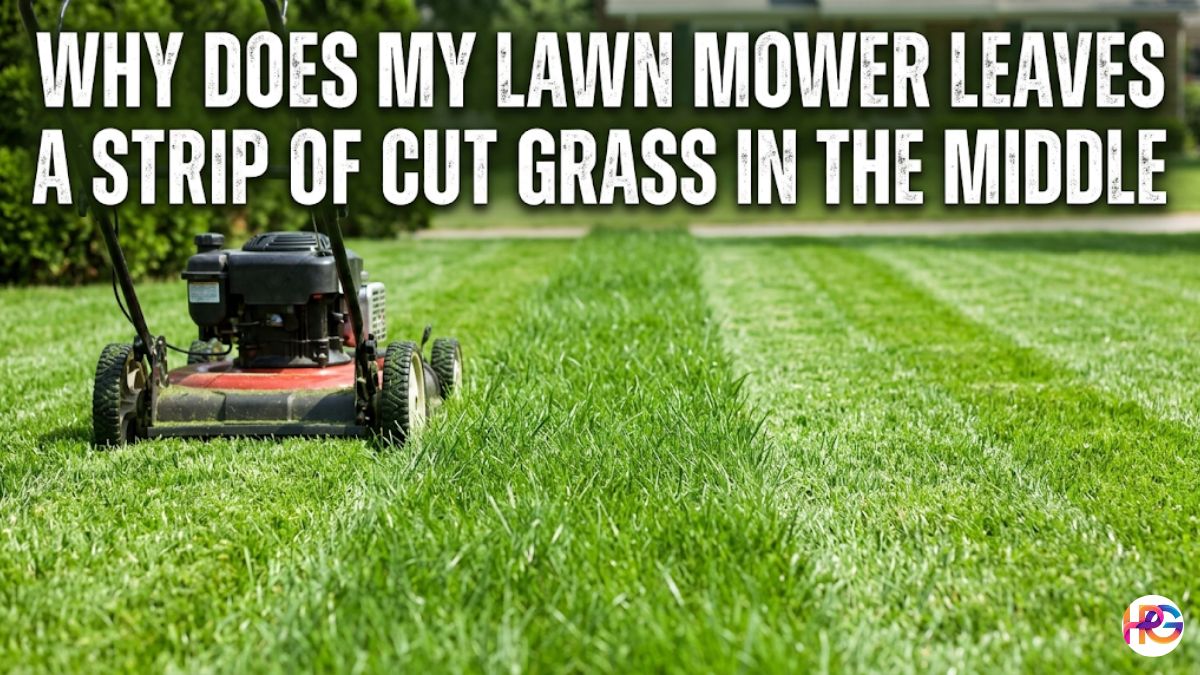
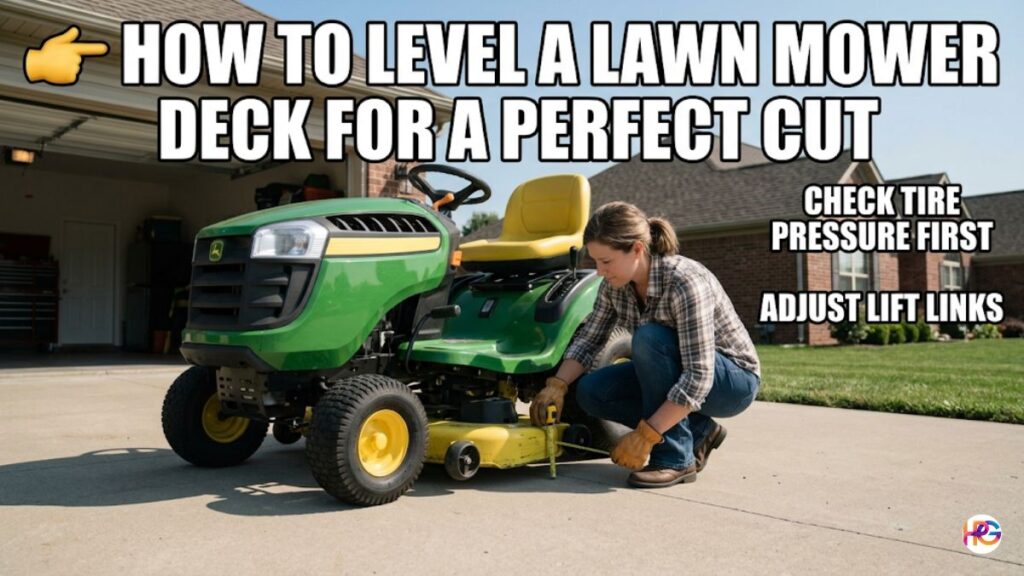
Last summer, my backyard looked like a green striped circus tent. One side of the lawn was short. The other side looked like a wild jungle. I had missed a spot right down the middle on every single pass. My neighbor looked over the fence and laughed. That was the day I knew I had a problem. My lawn mower deck was totally crooked.
I used to think my yard was just uneven. But the real issue was beneath the machine. Rough terrain and hitting thick tree roots had knocked things loose. A bad cut is almost always due to a tilted mower deck.
Getting a clean cut is not hard. You do not need to pay a shop to fix this. I spent less than half an hour fixing mine in my driveway. It completely changed how my grass looks. If your yard looks streaky or scalped, this guide is for you. I will share my exact steps, my mistakes, and how you can fix yours today.
Why a Leveled Mower Deck Matters
A crooked deck does more than just make your grass look bad. It actually harms your lawn. When one side cuts too low, it scalps the grass. Scalping cuts into the crown of the blade. This leaves brown patches and invites weeds to grow.
A bad deck angle also strains your machine. The blades drag through the grass instead of cutting it cleanly. This wastes fuel and wears out your belts.
| Problem | Cause | Lawn Impact |
| Scalped patches | One side is too low | Brown spots and weeds |
| Uncut strips | Blades are too high | Messy, uneven look |
| Torn grass tips | Bad front-to-back pitch | Gray or brown dead tips |
I learned this the hard way. My grass tips turned gray and died after a rough mow. The cut was so bad because my deck was sagging backward. Once you fix the alignment, the machine glides smoothly. Your grass stays healthy, bright green, and even.
The Secret First Step: Tire Pressure
During my first attempt, I made a huge mistake. Without thinking it through, I grabbed my wrenches and started turning the adjustment bolts right away. After spending twenty frustrating minutes trying to get both sides even, I realized I was approaching the problem the wrong way. No matter what I did, the measurements stayed wrong. Then I felt the front left tire. It was soft.
An under-inflated tire tilts the whole mower body. If your tires are uneven, your deck will be uneven too. You can never get a true measurement on a soft tire.
- Check the side of your tire for the correct PSI number.
- Use a simple hand gauge to check all four tires.
- Add air until each tire matches the manual.
Do this step before anything else. Park your mower on a flat concrete floor. My garage floor worked perfectly. If you try to do this on the grass, your numbers will be wrong.
Gather Your Tools for the Job
You do not need fancy gear for this project. I used basic tools from my storage shelf. Having everything ready saves time and prevents frustration.
- A tire pressure gauge to check the wheels.
- A standard tape measure or a small block of wood.
- A pair of thick work gloves to protect your hands.
- Two adjustable wrenches or a basic socket set.
Some people buy a specialized plastic deck gauge. It is a small tool that slides right under the deck to measure blade height. A standard tape measure works fine too, but the specialty gauge is much easier to read.
How to Measure the Side to Side Level
Safety comes first here. Turn off the engine. Take the key out of the ignition switch. Then, pull the spark plug wire off the plug. This stops the blades from turning on by accident while your hands are underneath.
Put on your thick work gloves. The cutting blades can still cut your fingers even when the engine is off. Reach under the rim of the deck and turn the blades. You want them lined up side to side. They should be parallel to the front axle.
Now, measure from the ground up to the very tip of the left blade. Write that number down. Move to the right side and measure the tip of the right blade. These two numbers should be identical.
If the two sides are within one-eighth of an inch, you are in good shape. My left side was a full half-inch lower than the right side. That explained the giant ridges in my yard.
Adjusting the Side Lift Links
To fix the side-by-side lean, look for the lift links. These are metal rods that hang down and hold the deck to the frame of the mower. You will find one link on each side, near the rear tires.
Each link has an adjustment nut on top. Turning this nut changes the height of that specific side.
- To raise the side of the deck, turn the nut clockwise to tighten it.
- To lower the side of the deck, turn the nut counterclockwise to loosen it.
- Use a deep socket wrench to make the turns easy.
Make small adjustments. I usually do two full turns of the nut, then stop and check. Measure the blade tips again from the concrete floor. Keep tweaking until both sides match perfectly.
Understanding Front to Back Pitch
Once the sides are even, you need to check the front-to-back pitch. A lot of people do not know this secret. A mower deck should never be perfectly flat from front to back.
The front tip of the blade needs to sit slightly lower than the rear tip. This angle is called the pitch. It ensures the blade cuts each blade of grass just one time.
If the deck sits flat, the back of the blade hits the grass a second time. This chops the grass into a pulp and tears the edges. Your mower will also bog down in tall grass because it is working twice as hard.
Measuring the Front to Back Pitch
To check the pitch, stay on your flat concrete surface. Reach under the deck and turn the center blade so it points straight ahead. It should be parallel to the frame of the mower.
Measure the height from the ground to the very front tip of the blade. Then, measure from the ground to the very rear tip of the same blade.
| Blade Position | Correct Height Target |
| Front Tip | Should be lower (e.g., 3 inches) |
| Rear Tip | Should be higher (e.g., 3.25 inches) |
The front tip should be one-eighth to one-quarter of an inch lower than the rear tip. If the front tip is higher, or if they are dead even, you need to adjust the front hanger.
Adjusting the Front Draft Rod
The front of the deck hangs from a long metal rod called the front draft rod. This rod runs from the deck up toward the front bumper of the mower. You will find a large nut at the very front end of this rod.
Adjusting this nut tilts the entire deck forward or backward.
- Tighten the nut on the front rod to raise the front of the deck.
- Loosen the nut on the front rod to drop the front of the deck down.
Give the nut a few turns with your wrench. Then, grab your tape measure and check the front and rear blade tips again. It took me three tries to get the perfect one-quarter-inch drop on the front tip. Take your time here.
Testing Your Hard Work
Once your numbers match the targets, put the tools away. Reconnect your spark plug wire. Lower the mower back down to your normal cutting height. It is time for a test run.
Choose a small, visible patch of grass for your test. Drive the mower at a steady, normal speed. Look backward at the path you just cut.
The grass should look perfectly flat like a golf green. There should be no mohawks of tall grass left standing between the blades. If you see a small ridge, one of your side links might need one more turn.
When to Look for Other Issues
Sometimes you can level the deck perfectly, but the cut still looks awful. If your measurements are correct on concrete but the lawn is uneven, you might have a bent blade.
I hit a thick tree root two months ago. The deck stayed level, but the steel blade itself bent upward.
- Look closely at the blades when you take them off to sharpen them.
- Lay the blades on a flat workshop table to see if they wobble.
- Inspect the blade spindles to make sure they are not cracked or loose.
A bent blade will create a strange vibration while you mow. If your machine shakes or makes a loud humming noise, replace the blades immediately. New blades are cheap and will keep your spindle bearings from breaking.
A Quick Maintenance Schedule
I now check my deck alignment twice every year. It keeps my yard looking sharp and saves my mower from extra wear. You do not have to wait for your lawn to look bad before you check it.
- Check tire pressure every single month during mowing season.
- Check the deck level in the spring before your first big mow.
- Re-check the level in mid-summer if you hit a rock or a curb.
Keeping things aligned takes very little effort once you know where the bolts are. Your lawn will look better than ever, and your mower will thank you.
Frequently Asked Questions:
How do I choose the best deck leveling tool for my garage?
A dedicated plastic deck leveling gauge works best. It fits into tight spaces under the mower shell. This tool gives you a fast, precise reading of your cutting height.
Can temperature changes in a cold shed affect my tire pressure gauge?
Yes, extreme cold drops air pressure readings. Store your digital gauge inside your house. Accurate tire pressure is key to a level mower deck and a straight cut.
Do John Deere and Craftsman mowers use the same adjustment tools?
Most major brands use standard hex nuts for lift links. You only need a basic socket set or an adjustable wrench. Always check your specific manual for the exact nut size.
How do I safely handle sharp mower blades during a tool inspection?
Always disconnect the spark plug wire first. Wear heavy leather work gloves to protect your skin. Use a wood block to wedge the blade so it cannot spin while you work.
Will an impact wrench damage my mower blade spindle bolts?
An impact wrench removes stubborn bolts fast. However, you must use a standard torque wrench to tighten them. Over-tightening can crack the spindle housing or strip the threads.
Also Read this Important Article on: Why Does My Lawn Mower Leave a Strip of Cut Grass in the Middle