(Before You Waste Your Money)
I woke up coughing last Tuesday. The air felt thick. My throat was dry. I looked at the small Levoit in my big room. It hummed like a mad bee, but did no good.
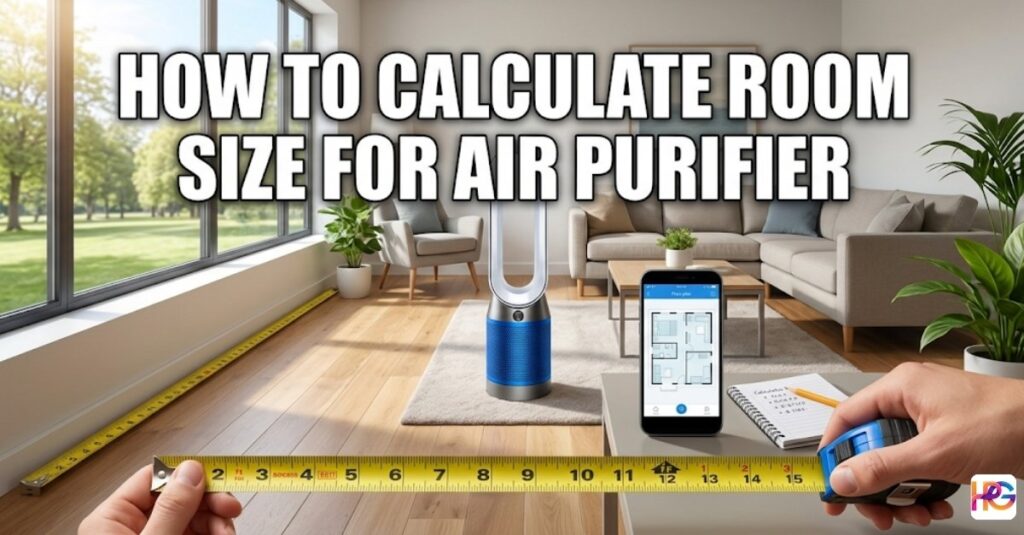
Cold Midwest months trap dust in the house. Buying the wrong size HEPA fan is a bad trap. Do not waste your cash. I will show you exactly how to calculate room size for air purifier needs. It takes just two short minutes.
Why Sizing an Air Purifier Properly Changes Everything
Nobody wants to pay cash for fresh air just to sneeze at floating dust. Getting the size right is your first step.
I learned this the hard way back in my old apartment. I stuck a tiny unit next to the sofa on a lazy Sunday afternoon. The whole thing felt like a total joke. Running at max speed day and night, it roared like a jet engine while I tried to watch a movie. Before long, the constant noise got on my last nerve.
Because the motor was too weak for the space, it burned out in just six months.
When you buy the right size, everything feels different. I put a properly sized unit in my bedroom last fall. It runs so quietly on low speed. When I walk in, the indoor air actually smells crisp. My nose stays clear. I sleep like a rock now.
Here is the big secret to good airflow. It is called Air Changes Per Hour, or ACH. A strong HEPA filter must clean the air in your room fast. To really work, your machine should clean all the air in the space at least 4 to 5 times an hour. If the unit is too weak, you just push dirty air around the room.
The Easy Math: Square Footage for Air Purifier
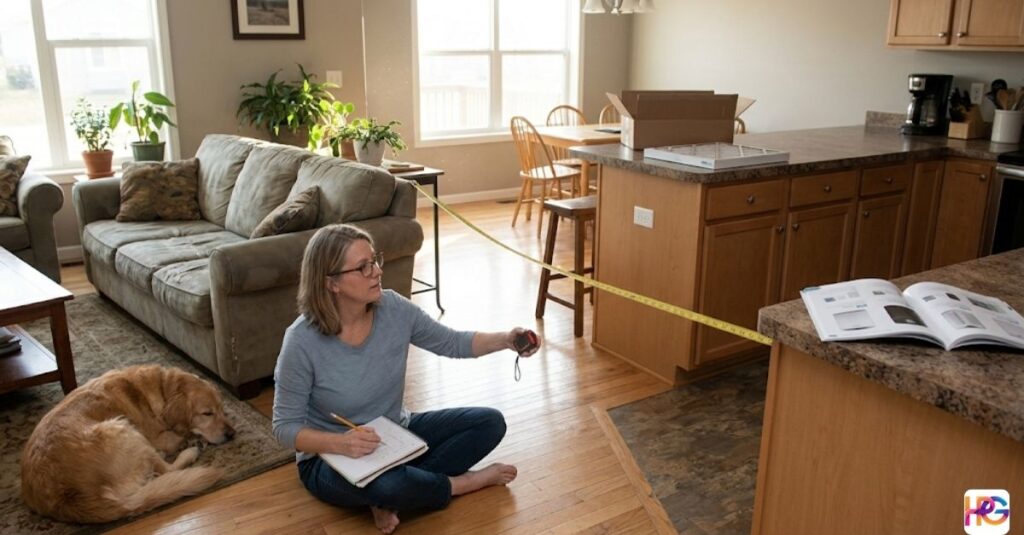
Grab that cheap tape measure from your messy kitchen junk drawer. We have to do a little math, but I promise it is the very easy kind.
Step 1: Measure Length and Width
I stood in my bedroom last Saturday, just staring at the walls. I felt a bit silly. But I needed real numbers to pick a better unit and stop guessing. Learning how to calculate room size for air purifier models starts right here. First, measure your longest wall. Then, measure the shortest wall. Grab your phone. Open the calculator. Multiply those two numbers together. Boom. That is your square footage for air purifier shopping. If your room is 10 feet wide and 12 feet long, you have 120 square feet. It really is that fast.
Step 2: Factor in the Wildcards
Houses are weird. Basic math does not always work in the real world. My own living room flows right into my kitchen. There is no door at all.
- Open Floor Plans: Air does not care about invisible lines. If two rooms connect, you must measure both spaces. The machine will pull in that dusty kitchen air, too.
- High Ceilings: Look up. Are your ceilings over eight feet tall? If they are, you need more power. You must figure out the total room volume, not just the flat floor. Just multiply your floor space by the exact height of your ceiling.
CADR Rating Explained (The Secret Weapon)
I used to stare at the boxes in the store. The numbers looked like a secret code. Then I learned about the CADR rating. This number is your best friend when buying an air purifier. It tells you the plain truth. It shows how strong the fan actually is.
CADR simply stands for Clean Air Delivery Rate. Last Thursday, I burned some bacon in a pan. The thick smoke filled my house fast. A high CADR means the unit clears out that awful smoke in a flash. It also sucks up heavy spring pollen and thick dust from the air.
Calculating CADR is very easy. I do this quick math on my phone. Here is the golden rule. Your CADR should be at least two-thirds of your room’s square footage.
Let us look at a fast, real-world example. Say you have a nice 300-square-foot room. You just find two-thirds of 300. That gives you 200. So, you need a CADR of at least 200. It is just that simple. Do not guess. Just look for that number on the box.
What Size Air Purifier Do I Need? A Quick Guide
Forget those confusing charts on the back of the box. They always make my head spin while I stand in the store aisle. Let us skip the headache. Here is exactly what to look for based on where you are sitting right now.
Small Rooms and Offices (Under 200 sq ft)
I spend hours working in my tiny home office. The air gets stuffy fast. For a small space or a kid’s bedroom, you do not need a massive machine. Desktop models are perfect here. I keep a small one right next to my warm coffee mug. Just look for a CADR around 100 to 150. It will keep the air fresh without taking up your floor space.
Medium Bedrooms and Kitchens (200 to 400 sq ft)
This is your standard master bedroom size. It is also the size of most home kitchens. Last winter, I bought a proper floor model for my bedroom. A tiny desk unit will not cut it here. You need a real floor model. Target a CADR of 200 to 300. This size easily clears out strong cooking smells and those pesky dust bunnies under the bed.
Large Room Air Purifier Guide (400+ sq ft)
Now we are talking about big open living rooms or damp basement spaces. You need the big boys for these open areas. Look for a strong unit with a CADR of 350 or higher. But let me share a secret I learned the hard way. One giant unit can be very loud and heavy. Sometimes, buying two medium units is a much smarter move. I put one at each end of my large living room. They run much quieter and clean the air so much faster.
How to Choose and Calculate Room Size for Air Purifier When You Are Stuck
Staring at two different boxes in the store is so stressful. I stood in the aisle last Friday for twenty minutes. My brain hurt. I was totally stuck between a medium and a large unit. Here is my best advice for how to choose air purifier size. Always pick the bigger one. Just trust me on this.
- The Noise Factor: Think about the daily noise. A small unit running on max speed sounds like a jet engine. I tried this cheap trick once. I sat down on my soft couch to watch a movie. The loud, angry hum got on my last nerve. I had to turn the TV volume all the way up. It was awful.
- The Silent Comfort: A large unit is much better. You can run a big machine on its lowest fan speed. It is practically silent. You will only hear a very soft, gentle whisper while you relax.
- Save Your Money: Buying a big unit actually saves you cash later. A large motor working less hard uses much less power. This smart choice keeps your monthly electricity bills low over time.
Final Thoughts on Sizing an Air Purifier
You have the old tape measure in your hand now. You know the easy math. Do not put it off. I know doing math is boring. I really hate it, too. But last night, I sat on my living room rug. I took a deep breath. The air felt so cool and clean in my lungs. I actually smiled at my quiet machine.
Go check the square footage of your room right now. Walk over to that long wall. Get those numbers. Breathing fresh, clear air in your own home is the best feeling. No more dry, scratchy throats. No more weird, dusty smells. It is totally worth taking two short minutes to do the simple math. Your lungs will thank you tonight.
Frequently Asked Questions
How do I find my air purifier room size?
Measure your room’s length and width in feet. Multiply them to get the square footage. This simple step helps you pick the best machine for your home air, saving you money.
What is a good CADR rating for my space?
A good rule is to pick a CADR rating that is two-thirds of your room’s square footage. This ensures the fan is strong enough to keep your indoor air very clean and fresh.
Does square footage for air purifier use include ceilings?
Most brands assume eight-foot ceilings. If your ceilings are very high, you need a more powerful unit. Total room volume matters much more than just the flat floor space.
Can I use a large room air purifier in a small bedroom?
Yes, you can! A larger unit cleans the air faster. It also runs much more quietly at low speeds. This makes it a great choice for a peaceful and deep sleep every single night.
How often should the air change in my room?
Aim for four to five air changes per hour. This keeps the air fresh and free of dust. A properly sized unit makes this happen easily without making too much noise.