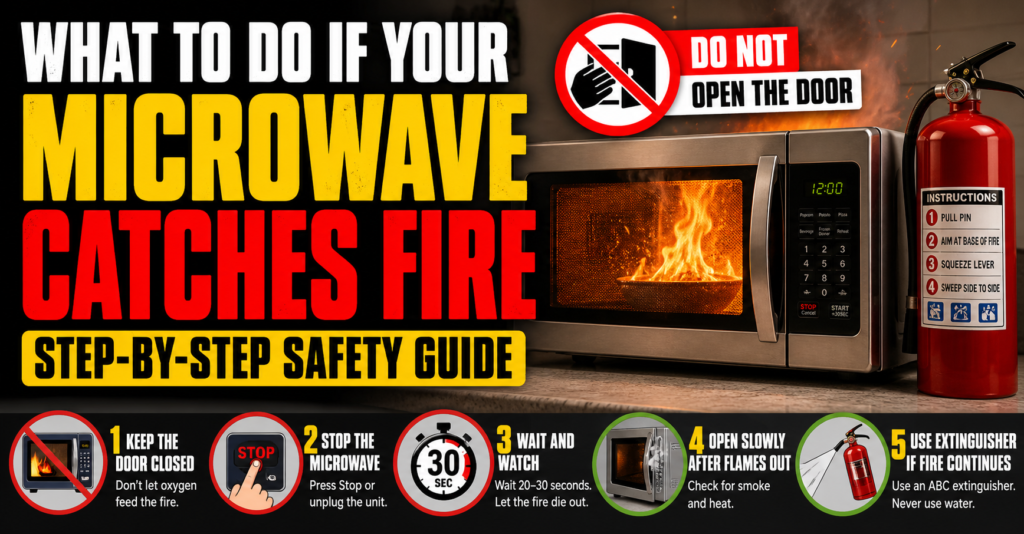
(Step-by-Step Safety Guide)
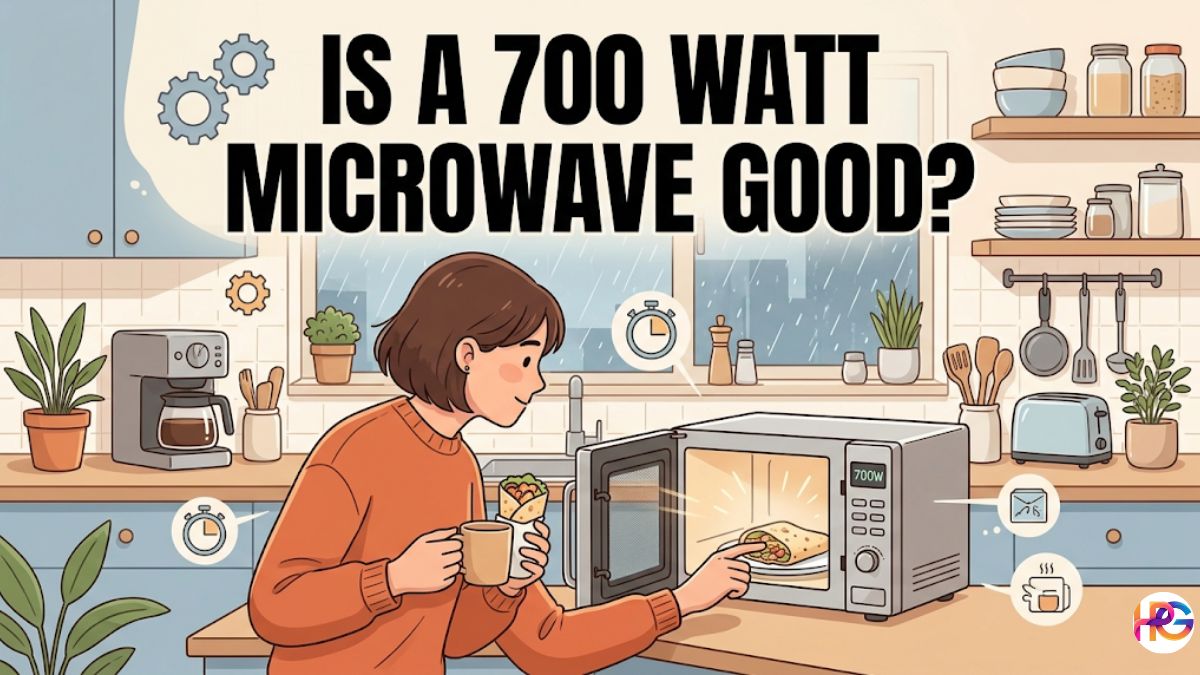
Rain tapped the window that night. I was tired and hungry. After tossing a popcorn bag into my old Samsung microwave, I hit start. A quick trip to grab a drink took only one minute.
Then I smelled it. Not popcorn. A sharp, burnt smell that made my chest tight. I turned and saw a small orange flame inside the microwave.
My heart raced. I wanted to open the door at once. I am glad I did not.
Why You Should Not Open the Microwave Door During a Fire
A microwave is a sealed metal box. That box can trap heat and also trap fire. When you open the door, fresh air rushes in and feeds the flames.
I stood still and kept the door shut. The flame flickered and then grew smaller. It struggled without air and light.
That moment taught me a rule I will never forget. If there is fire inside, keep the door closed.
Step 1 — Stop the Microwave and Cut the Power
I pressed the Stop button right away. The humming sound ended, and the light went off. That single step removed the heat source.
If the buttons fail, unplug the unit. If it sits in a cabinet, switch off the kitchen breaker.
| Action | Why it helps | What it stops |
|---|---|---|
| Press Stop | Ends heat | Stops fuel from heating |
| Unplug | Cuts power | Prevents sparks |
| Flip breaker | Backup step | Kills power fast |
With no heat and no air, the fire began to fade.
Step 2 — Wait 20–30 Seconds and Watch
This part felt long but it was not. I watched through the glass and did nothing else. The flames turned to smoke and then to a dull glow.
Most microwave fires start from simple causes. Old grease, metal bits, or overheated food can ignite fast. In my case, it was burnt popcorn and grease on the ceiling.
Without air and power, the fire had nothing left to burn.
Step 3 — Open the Door Slowly Only After Flames Stop
I waited until I saw no flames at all. Then I opened the door a little and stepped back. A wave of gray smoke came out but no fire.
If you still see flames, close the door again at once. The door is your best safety shield in that moment.
Slow and calm actions matter more than speed here.
Step 4 — When to Use a Fire Extinguisher on a Microwave
I did not need one that night, but I keep one now. For kitchen fires, use an ABC extinguisher like the Kidde FA110 Multi Purpose Fire Extinguisher.
Never throw water into a microwave fire. Water and electricity are a bad mix.
| PASS Step | What to do |
|---|---|
| Pull | Pull the pin |
| Aim | Aim at the base |
| Squeeze | Press the handle |
| Sweep | Move side to side |
Use it only if flames continue after waiting.
What I Saw After the Fire
The smell was harsh and smoky. I left the door open and unplugged the unit for an hour. I did not touch it until it cooled.
Later, I used a flashlight to look inside. I saw black marks on the ceiling and near the side panel.
That told me this was not random. This was a build-up problem I had ignored.
The Hidden Cause Most People Miss
The waveguide cover had grease on it. That thin panel protects key parts inside the microwave. When grease sits there for weeks, it can overheat and catch fire.
I used to clean the plate often. I never wiped the ceiling.
That small habit was the real cause.
Common Causes of Microwave Fires
After this scare, I looked into other causes. Many matched what I saw in my kitchen.
| Cause | Why it starts fire |
|---|---|
| Metal foil or spoon | Sparks turn into flame |
| Grease buildup | Overheats and ignites |
| Running empty | Energy hits parts inside |
| Burnt popcorn | Paper bag catches fire |
| Heating oil too long | Oil reaches flash point |
These are simple kitchen mistakes. They happen fast.
What to Do After a Microwave Fire
The next day, I did a full check before using it again. I cleaned the inside with vinegar and baking soda.
Then, the microwave was checked for melted paint and strange smells. A close inspection of the waveguide cover revealed no burns. If you see damage or smell wires, do not use it again.
I replaced mine a week later because I did not trust it.
When You Should Call for Help
My fire stayed inside the microwave. That is not always the case. Call for help if flames spread or smoke fills the room.
Also call if cabinets catch fire or you feel unsafe. Kitchen fires grow fast and can turn serious in seconds.
There is no shame in asking for help.
The Simple Habit That Now Prevents This
Now I wipe the microwave ceiling once a week. It takes less than a minute and stops grease build-up.
I also stay in the kitchen when heating popcorn. That small change gives me peace of mind.
Tiny habits prevent big problems.
Quick Emergency Checklist
| Step | Action |
|---|---|
| 1 | Keep the door closed |
| 2 | Press Stop |
| 3 | Wait and watch |
| 4 | Open slowly after flames stop |
| 5 | Vent and inspect |
These steps work because they remove heat, air, and fuel.
Final Thoughts From My Experience
That night changed how I see a simple kitchen tool. I learned that calm steps work better than panic.
Doing less actually helped more. The door stayed shut while the power remained off until everything cooled down.
If your microwave catches fire, remember this story and stay calm.
FAQs — What to Do If Your Microwave Catches Fire
1) What should I do first if my microwave catches fire?
Keep the door shut and press Stop. This cuts the heat and air, which helps the fire die fast. Wait and watch through the glass before you touch anything.
2) Why is it dangerous to open the microwave door during a fire?
Opening the door feeds the flames with fresh air. A small fire can grow in seconds. The closed metal box helps contain the fire safely.
3) Can I use water to put out a microwave fire?
No. Water and electricity are a bad mix and can shock you. Use an ABC extinguisher like the Kidde FA110 Multi Purpose Fire Extinguisher if flames do not stop.
4) What usually causes a microwave to catch fire?
Grease on the ceiling, metal foil, or burnt popcorn are common causes. These items spark or overheat and ignite fast inside the small space.
5) Is it safe to use the microwave again after a fire?
Only if there is no burn damage or strong wire smell, check the waveguide cover and walls for marks. If you see melting, replace the unit.