Why Is My Microwave Sparking? (Even With No Metal Inside)
It was a wet Tuesday in Ohio. I just wanted hot chicken. I pressed start on my GE oven. Next, I saw a blue flash. I heard a loud crack. It smelled like bad toast.
You may ask, why is my microwave sparking? I know that fear. Old grease or a bad guide plate can do this. A good Whirlpool arc is no joke. I will help you fix it fast.
What “Sparking” Really Means Inside a Microwave
When you ask, why is my microwave sparking, the answer is usually arcing. That bright flash is an electrical discharge. It looks wild, but it is not a fire from nowhere. Energy is just jumping around inside the box, looking for a path.
The Role of the Magnetron
Last summer in my humid Florida garage, I took apart my old unit to look inside. I wanted to see the magnetron up close. This part acts like a heart that pumps out microwave energy to heat your food. If the energy has nowhere safe to go, it bounces back. That bouncing energy creates the scary flashes we see.
The Job of the Waveguide Cover
Look inside your microwave on the right wall. You will see a small panel that looks like thick cardboard. This is the waveguide cover, and it guides the heat to your meals. If you heat soup and it splashes, the grease sticks to this cover. That hidden grease is a massive cause of sparks.
Why Microwaves Can Spark Without Metal
You do not need a rogue fork to make your oven flash. Sometimes, the food itself causes the problem. Carrots and chicken have natural minerals that can arc. Burnt food bits or peeling paint on the inside walls also act just like metal. I learned this the hard way after reheating some very dry chicken.
Why Is My Microwave Sparking Without Metal in It?
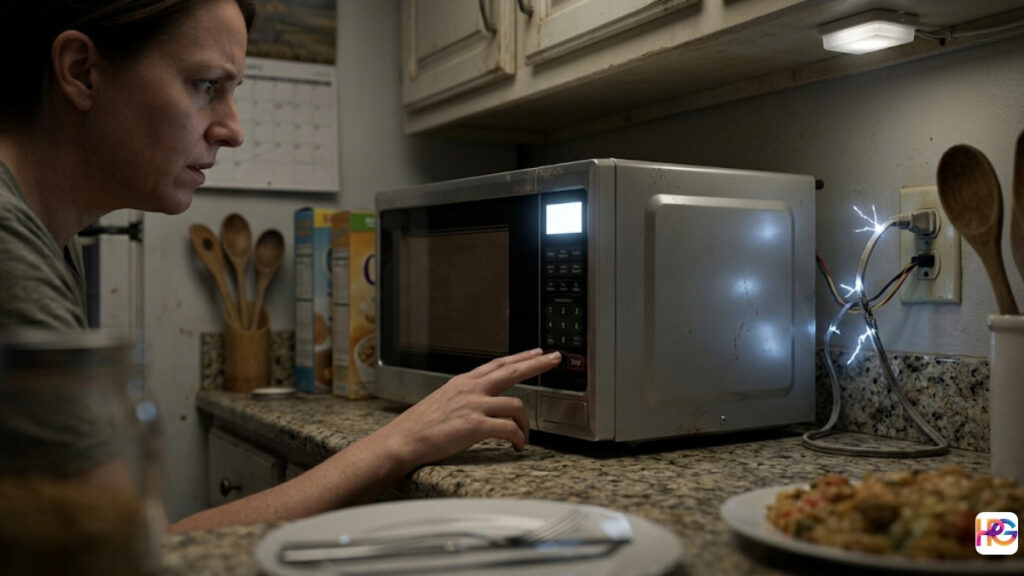
It is a wild feeling to see flashes when you know your plate is totally safe. You stand there in pure shock and wonder, why is my microwave sparking without metal in it? It makes no sense to see a loud light show with a plain glass bowl. Yet, there are a few sneaky things inside that act just like a stray fork. Let me show you the hidden traps I have found over the years.
Grease or food splatter on the waveguide cover
We all skip wiping down the oven sometimes when we are in a rush. Last winter in cold Denver, I heated a big bowl of chili that popped everywhere. That thick grease stuck right onto the small waveguide cover on the side wall. When the unit runs again, it cooks that old grease and creates a loud arc. Learning how to deep clean your microwave and keeping that small cover clean is the best way to stop the sparks.
Charred food particles acting like metal
Food can become a real hazard if it gets way too hot and burns. A small piece of burnt cheese can turn into solid carbon over time. This hard carbon acts exactly like a piece of tin foil inside the box. The microwave energy hits that dark spot and sparks fly out instantly. It smells like bad smoke and ruins your lunch appetite very fast.
Peeling paint or exposed metal inside walls
The inside of your oven has a smooth coat of paint to keep things safe. Years of hard scrubbing and high heat can cause that white paint to chip away. Once the bare metal wall is exposed, the energy bounces right off of it. I once ignored a peeling corner, and it caused a wild spark that left a deep scorch mark. You must cover chipped spots right away with special appliance paint to stay safe.
A failing magnetron sending uneven energy
Sometimes, the main power part of the oven just starts to wear out. The magnetron can get old and send uneven bursts of heat into the food area. I remember seeing a tiny burnt dot on my oven wall that I ignored for months. That small, dark dot was a clear sign of bad electrical flow. When the heart of the unit breaks like this, you usually need to shop for a new one.
Why Is My Food (or Chicken) Sparking in the Microwave?
It is a wild shock when your dinner fights back. You might wonder, why is my microwave sparking right on my plate? Sometimes the dense minerals inside your meal react with the high energy. You will see tiny blue flashes coming right out of the food itself. It is scary but very common.
Mineral content in foods (especially chicken, carrots, leafy greens)
One chilly Sunday in Chicago, I just wanted to heat up some chicken and kale. I tossed my plate inside, and the food lit up like a tiny storm. Foods like chicken, thick carrots, and leafy greens are full of natural minerals. These minerals act like tiny metal pieces and catch the waves to make sparks fly.
Overcooked edges turning into carbon points
We all forget our food inside the oven sometimes. If you cook a meal too long, the thin edges will burn and turn to hard carbon. This dark carbon works just like a stray piece of tin foil. When the energy hits those dry, burnt spots, they arc and spark fast. I always trim the burnt edges off to keep things safe.
Using foil-lined plates or metallic trim dishes by accident
Sometimes the food is fine, but the plate is the real danger. I once used a nice vintage bowl with a very thin gold rim. That tiny painted rim was actually metal, and it sparked the second I hit start. You must always check your dishes for hidden foil lines or shiny metallic trim. Even a tiny speck of metal paint will cause a huge scare.
Dry food reheated too long
Moisture helps microwave energy heat your meals safely and evenly. If you try to warm up a very dry piece of bread, the energy has no water to absorb it. The dry food heats up too fast and starts to scorch from the inside out. This makes the meal spark, and it can even start a small fire. I always add a damp paper towel over dry foods now.
What Causes a Microwave to Spark With Nothing in It?
Seeing flashes inside an empty oven is truly a scary thing. You might wonder what causes a microwave to spark with nothing in it. It feels like magic, but it is just trapped energy looking for a target. It is a wild feeling to press start and see instant lightning.
Running the microwave empty (no load for energy)
One busy morning in Austin, my kid started the oven with nothing inside. The machine pumped out waves, but there was no food or water to soak them up. The energy bounced off the bare walls and created a loud electrical arc. You should never run an empty oven just to use the timer.
Damaged waveguide cover
The small square cover on the side wall is called a waveguide. If this cover gets soaked in old grease, it can burn right through the card. A ruined cover lets raw energy leak out into the open air. This will cause loud sparks even if the glass plate is completely empty.
Internal electrical failure
Sometimes the issue hides deep inside the actual machine parts. The main power tube can get old and start to send out broken waves. Wires might also get loose and create short circuits near the metal case. These deep electrical faults will create a loud buzz and bright flashes instantly.
Signs this is moving toward a fire risk
You must stop using the machine if you smell melting plastic or thick smoke. People often ask me, why did my microwave catch on fire with nothing in it? It happens because those bright sparks ignite the leftover grease or the plastic walls. A simple spark can turn into a real flame very fast if you ignore the warning signs and don’t know how to handle a microwave fire safely.
Why Is My Microwave Crackling When Not in Use?
It is very spooky to hear noises coming from a dead kitchen machine. You might pull your hot food out, close the door, and then wonder, why is my microwave crackling when not in use? I remember standing in my quiet kitchen one night, just listening to this weird ticking sound. The good news is that this crackling noise is usually normal, but it can sometimes hint at a hidden flaw. Let me explain the three main reasons this happens.
Cooling metal contraction sounds
The inside of your oven gets extremely hot while it runs. Once the cooking stops, the thin metal walls start to cool down and shrink fast. This sudden change makes the metal shift, which sounds like a wild ticking or popping noise. It is just like the pinging sound a hot car engine makes when you park it in the driveway. You do not need to worry about this simple heat reaction.
Residual grease burning slowly
Sometimes the noise is not metal, but leftover food trying to cook. If you heat up something heavy like bacon, hot grease can splatter onto the hot glass plate or walls. Even after the machine turns off, that thick grease stays very hot and continues to sizzle slowly. This makes a soft crackling sound and can leave a faint burnt smell in the room. A quick wipe with a damp cloth will stop this noise right away.
Early electrical failure signs
The final reason for this noise is a bit more serious. If the crackling sounds like tiny sparks or a loud electrical buzz, you might have a loose wire. The control board or a failing door switch can slowly leak power even when the machine is shut. If you hear this sharp buzzing, unplug the unit from the wall right away. This early warning sign means you need to call a pro before things get worse.
Is It Safe to Use a Microwave That Sparks?
It is a very scary moment when your oven lights up like a tiny storm. You might freeze in your tracks and wonder, is it safe to use a microwave that sparks? I know that tight feeling in my chest when I see those bright blue flashes. Most of the time, the fix is simple, but sometimes you need to walk away fast. Let us break down when to clean and when to unplug.
When it’s safe (simple cleaning fix)
One Friday afternoon in Seattle, my oven sparked over a simple bowl of soup. The hot liquid had popped a heavy drop of fat right onto the side wall. It sparked loudly, but the fix was just a warm, damp rag. If the spark comes from a bit of burnt food or a dirty guide cover, it is usually safe to fix. Just unplug the unit, wipe the dirty spot clean, and test it again.
When to stop immediately
You must never ignore a dark smoke cloud or a smell like melting plastic. If the spark comes from deep inside the machine walls, stop using it right away. I once saw a wild flash come from the back vents of an old unit. I pulled the plug fast because that meant the deep wiring was melting. Do not risk a bad house fire just to warm up your lunch.
After arcing — should you use it again?
People often ask me if their oven is ruined forever after a loud arc. The truth is, it depends entirely on where the flash happened and what caused it. Once you clean the mess or remove the shiny metal wrapper, test the unit with a glass cup of water. If the water gets hot and the sparking stops, your machine is fine. Here is a quick list to help you decide what to do next.
- Safe sign: The spark came directly from a dirty spot of food.
- Safe sign: You left a metal fork or foil on the plate by accident.
- Unsafe sign: You hear a loud electrical buzz from the back motor.
- Unsafe sign: The inside metal wall has a deep, dark, burnt hole.
Signs Your Microwave Needs Repair (or Replacement)
Every machine gets old and tired eventually. You might notice weird sounds or see a flash and wonder if it is time to say goodbye. When my old unit hit the ten-year mark, it started acting very wild. Here are the main signs that tell you to fix your oven or just buy a new one.
Loud humming or buzzing
A soft hum is normal when you heat your food. But a very loud buzz means the main power tube is struggling to work hard. I heard this deep grinding noise one morning in Boston while making a quick bowl of oatmeal. It sounded exactly like an angry bee trapped inside the metal box. That loud noise usually means a big, expensive repair bill is coming very soon.
Smoke or burning smell
You should never ignore a bad smell coming from your kitchen appliances. If you smell melting plastic or see dark smoke, pull the plug from the wall right away. This means the hidden wires inside are burning up and creating a huge fire risk. I once ignored a faint burnt wire smell, and it ruined the whole machine by the next day. Safety must always come first when you smell electrical smoke.
Peeling interior paint
The white paint inside the box is not just for good looks. It actually stops the raw energy from hitting the bare metal walls. If you see flakes of paint falling off, the metal underneath will start to arc. You can fix tiny chips with special appliance paint if you catch them early enough. If the whole wall is peeling away, it is much safer to just buy a new oven.
Food heating unevenly
Sometimes the machine runs fine, but your dinner stays totally cold. You might pull out a bowl of soup that is boiling on top and frozen solid on the bottom. This happens when the magnetron starts to die and sends out very weak power. I really hate biting into a cold spot after waiting for a hot meal. When the oven stops doing its main job, replacement is usually your best bet.
Sparking continues after cleaning
A good, soapy scrub solves most of the scary light shows in the kitchen. But what if you clean the guide cover perfectly and it still arcs? If the sparking continues after a deep clean, the core parts are failing inside. I learned that a spotless oven should never flash blue lightning at you. When a clean machine still sparks, it is time to shop for a fresh one.
How to Tell If the Magnetron Is Bad
The magnetron is the true heart of your kitchen oven. When this main part fails, the whole machine stops working properly. I have taken apart many units over the years to fix them. It is always a huge bummer when this vital electrical part finally dies.
Microwave runs but doesn’t heat
One cold morning in upstate New York, I tried to warm my coffee. The glass plate spun around, and the inside light turned on just fine. However, when the timer beeped, my morning drink was still ice cold. A dead heart means the machine acts normal but makes zero heat.
Strange buzzing noise
A failing power tube will often cry for help before it breaks. You might hear a very loud, angry growl from the back panel. I once heard a deep hum that sounded like a heavy truck engine. That strange buzzing noise is a clear sign that the main tube is struggling.
Repeated arcing from same spot
Sometimes the energy gets stuck and causes a wild light show. You might wonder, why is my microwave sparking from the exact same corner? A broken tube sends out uneven waves that hit the metal walls hard. If you see repeated arcing in one spot, the core part is likely ruined.
Cost of magnetron vs new microwave
Buying a new magnetron part can cost a lot of money today. You also have to pay a pro to fix the high-voltage wires safely. I always compare the high repair bill to the price of a brand new unit. Most of the time, replacing the whole oven is the much smarter choice.
Is Microwave Smoking Normal?
Seeing smoke in the kitchen is a huge shock. You might panic and wonder if the machine is going to explode right there. The good news is that not all smoke means a real fire. Let me share how to tell normal smoke from a wild danger.
First-time factory coating burn-off
When you buy a brand new oven, it has a clear oil coat inside. This factory oil burns off the very first time you heat a meal. I saw this on a sunny Monday in Texas with my new unit. It smoked a bit, but it was just the oil turning to harmless gas.
Grease smoke vs electrical smoke
Thick grease from old bacon will smoke when it gets too hot. This white smoke smells exactly like burnt food and goes away fast. Real electrical smoke looks very dark and moves in heavy clouds. If you see dark smoke, you must unplug the power cord right away.
What electrical smoke smells like
Electrical smoke has a very sharp, foul smell that hurts your nose. It smells just like a hard plastic toy melting on a hot stove. You will instantly know it is not just a burnt piece of toast. That harsh chemical smell means the deep wires are burning up.
How to Test If Your Microwave Is Leaking Radiation
Many people fear that old units leak scary radiation into the house. I used to worry about this every time I stood near the door. The truth is that these machines are built to be very safe. Here are some simple ways to check if yours is sealed tight.
Door seal inspection
The door has a thick rubber seal to keep the energy inside. Over the years, this dark seal can dry out and get hard. Take a close look at the whole frame to spot any cracks. If the rubber looks broken or feels stiff, the seal is no longer safe.
Paper test for door gaps
You can do a fun test with a plain sheet of paper. Close the oven door with the paper trapped in the frame. Pull the paper gently to see if it slips right out. If it slides out with no pull, your door hinges are way too loose.
When to use a professional RF leakage tester
Sometimes the paper test is just not enough to calm your mind. You can buy a cheap RF tester tool online to check the waves. Just slowly move the small tool around the closed door while the machine runs. If the tool beeps loudly, it is time to throw the unit away.
What’s the Lifespan of a Microwave?
Nothing lasts forever in a busy kitchen. As your oven gets old, the parts wear out and cause loud sparks. You might wonder when it is finally time to give up on it. Let us look at how long these kitchen helpers should really last.
Average lifespan (7–10 years)
Most of these machines will work well for seven to ten years. After that decade mark, the main power parts start to slow down. My old model lasted eight years before it started making weird noises. If your unit is that old, you did a great job taking care of it.
Heavy-use households vs light use
A big family will wear out a machine much faster than one person. Heating up ten meals a day puts deep stress on the motor. If you only melt butter once a week, it could last much longer. Heavy daily use means you might only get five good years out of it.
When repairs stop making sense
Fixing a broken door switch is cheap and very easy to do. But fixing a dead magnetron costs almost as much as a new box. I hate wasting money on a fix that will just break again later. If the repair bill is over half the cost of a new unit, just buy a fresh one.
Step-by-Step: What To Do Immediately If Your Microwave Sparks
When you see that sudden flash, your heart skips a beat. You might freeze and ask, why is my microwave sparking right now? Do not panic when this wild light show happens. Just follow my simple steps to handle the scare safely.
- Stop the machine fast. Hit the stop button the second you see a flash. Do not wait to see if it stops on its own.
- Pull the plug out. Yank the power cord from the wall to kill all the power. This stops any hidden electrical fire from starting.
- Check the small wall cover. Look at the cardboard-like waveguide cover on the right side. Check if it has dark burn marks or wet grease spots.
- Scrub the inside clean. Use warm soapy water to wipe down the glass and metal walls. Remove every single drop of dried soup or old fat.
- Test it with plain water. Put a glass mug of water inside and run it for one minute. If the water gets hot and no sparks fly, you fixed it.
- Buy a new mica sheet. If that small cover is burnt hard, you must throw it away. You can buy a cheap replacement cover online and pop it in.
- Make a smart choice. If it still arcs after a deep clean, the main motor is dead. You have to decide if a costly repair is worth the money.
Quick Prevention Tips So It Never Happens Again
Nobody wants to ruin a good dinner with a loud zap. I learned to change my habits after burning up a nice plate of ribs in sunny Atlanta. Here is how I keep my kitchen safe from sudden sparks.
- Always cover your plates. Put a paper towel or a plastic dome over your hot meals. This stops wet grease from hitting the walls.
- Wipe it down every week. Keep a damp cloth handy and clean up any spills right away. A spotless oven will rarely ever spark at you.
- Do not use it as a timer. Never run the heat cycle with an empty glass plate inside. The wild energy needs to hit food, not bare metal.
- Watch your dry snacks. Add a splash of water when you heat up old bread or dry rice. Dry foods catch on fire very fast if you forget them.
- Look for bad paint spots. Check the white walls for deep scratches or peeling paint every month. Paint over any bare metal spots before they rust and arc.
FAQ
Why is my microwave sparking but no metal inside?
This usually happens because dense food minerals or hidden grease splatters catch the waves. Old burnt food acts just like a piece of tin foil.
What causes a microwave to spark with nothing in it?
An empty box means the high energy has nothing to absorb it safely. The waves bounce hard off the walls and create a loud electrical flash.
Is it safe to use a microwave that sparks?
It is safe only if the spark came from a simple grease spot that you can clean. If the spark comes from the back motor, you must unplug it fast.
Is my microwave safe after arcing?
Yes, it is usually fine to use again if you scrub the dirty spot completely clean. Just test it with a cup of plain water to be totally sure.
Why did my microwave catch on fire with nothing in it?
If you run it empty, the raw energy can ignite a dirty waveguide cover or melt the plastic walls. A tiny loose wire can also spark and start a fast fire.