My First Time Sharpening a Lawn Mower Blade (And the Mistakes I Made)
Last Saturday morning, I walked out to my yard in Ohio. The sun was just coming up. I looked down at my grass. It did not look good. The tips of the grass were brown and torn. It looked like a goat had chewed on my yard instead of a neat cut.
I knew the problem right away. My mower blade was completely dull.
That day, I decided to handle the repair myself. Saving some cash was part of the motivation, but I also wanted to find out whether a regular homeowner could do a quality job without a fancy workshop. It turns out you can do it easily. But I also made a couple of silly mistakes along the way.
Let me walk you through exactly how to sharpen lawn mower blades based on my own trial and error. I will tell you what worked, what went wrong, and how you can do it right on your first try.
Why Sharp Blades Matter for Your Lawn
I used to think a mower blade worked like a pair of sharp scissors. It does not. A mower blade spins fast and uses sheer force to slice the grass. When the edge gets dull, it stops slicing. Instead, it smashes into the grass.
When you use a dull blade, you tear the top off each blade of grass. Those torn edges turn brown the next day. This makes your whole lawn look dry and sickly.
A clean cut keeps the grass healthy. It helps the roots stay strong. Plus, a sharp blade makes your mower work less. The engine runs smoother, and you use less fuel. It saves your lawn and your equipment at the same time.
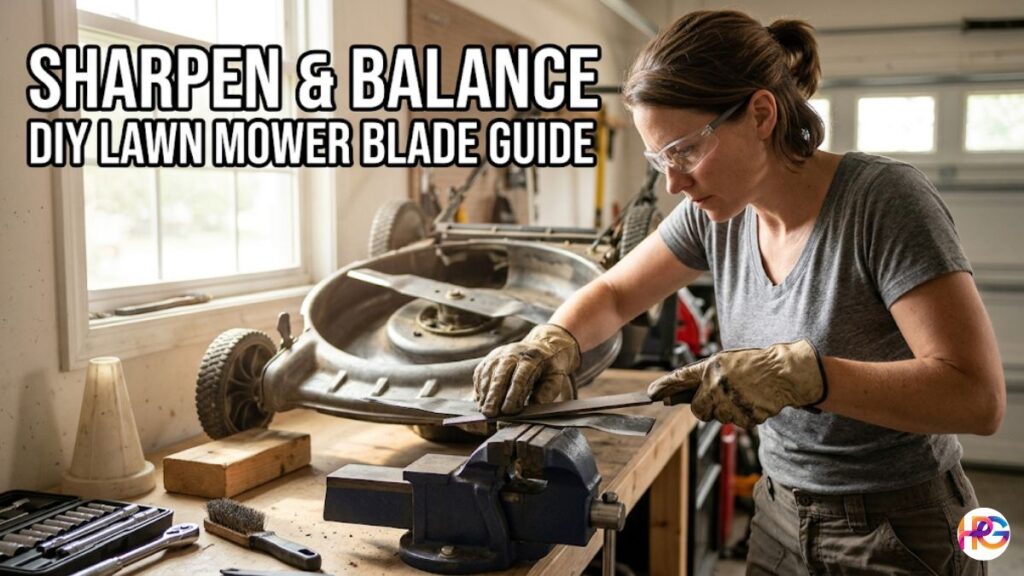
The Tools I Gathered for the Job
I am a big fan of keeping things simple. You do not need a lot of expensive gear for this project. I went to my garage and grabbed a few basic items.
Here is the exact list of tools I used for this DIY task.
My Simple Tool List
| Tool Name | What I Used It For | My Personal Rating |
| Socket Wrench | To remove the main blade bolt | Essential |
| Block of Wood | To stop the blade from spinning | Saved my knuckles |
| 10-Inch Mill File | To sharpen the actual metal edge | Great control |
| Plastic Cone Balancer | To check the balance of the blade | Crucial for safety |
| Wire Brush | To clean off old grass crust | Surprising helper |
You can also use a power drill with a grinding stone attachment. Some people love an angle grinder. I chose a simple hand file for my first try. It is slower, but it gives you total control. You cannot accidentally ruin the blade with a hand file.
The Safety Steps You Cannot Skip
Before I even touched the blade, I had to make sure the mower would not start. This is a vital rule. If the engine has gas and spark, turning the blade by hand can actually start the mower. That would be a complete disaster for your hands.
Pull the Spark Plug Wire
First, I located the spark plug at the front of the engine. I pulled the thick rubber wire right off the plug. I tucked it away to the side. For an electric mower, you just pull the battery out. This simple step gives you total peace of mind while you work.
Tilt the Mower the Right Way
Next, I had to tip the mower over to see underneath. I learned this the hard way a few years ago. You must always tilt the mower so the air filter points up toward the sky. If you tilt it down, engine oil will pour into the air filter. It makes a huge, smoky mess and ruins the filter. I made sure the carburetor and filter stayed high up.
How to Safely Remove the Mower Blade
Once the mower was tilted, I could see the underside of the deck. The blade was covered in old, dried grass. It looked like a mess.
I grabbed my socket wrench to take off the center bolt. But as soon as I turned the wrench, the blade just spun around.
The Wood Block Trick
This is where the scrap piece of wood comes in handy. I wedged a short 2×4 block between the blade and the metal frame of the mower deck. When I turned the wrench, the blade hit the wood and stopped cold. The bolt came right off after that.
Marking the Blade Orientation
Here is a mistake I almost made. Mower blades have a top side and a bottom side. The curved edges must point up toward the mower deck. If you put it on upside down, it will not cut a single blade of grass. Before I took the bolt all the way off, I took a black marker and wrote the word “BOTTOM” on the side facing the ground. This kept me from getting confused later.
Cleaning and Prepping the Metal
You cannot sharpen a dirty blade. My blade had a thick layer of green gunk and tiny pebbles stuck to it.
I took my wire brush and started scrubbing. It took some real elbow grease. I scraped the flat sides until I could see clean, gray steel.
Cleaning the blade does two things. It shows you where the actual dull edges are. It also ensures an accurate balance check later. A big chunk of hidden dirt on one side can trick your blade balancer.
How to Sharpen Lawn Mower Blades by Hand
Learning how to sharpen lawn mower blades by hand is a straightforward process that restores your mower’s performance. Now came the main event. I clamped the clean blade into my workbench vise. If you do not have a vise, you can clamp it firmly to a sturdy table. I picked up my 10-inch mill bastard file. I looked closely at the cutting edge to see the factory angle. It is usually a tilted angle of about 30 degrees.
The Correct File Stroke
You should only push a file in one direction. I placed the file against the blade edge and pushed it forward and away from my body. I lifted the file up, brought it back, and pushed again. Never saw back and forth. Sawing ruins the file teeth and makes a messy edge.
Count Your Strokes
I wanted to remove the same amount of metal from both sides of the blade. To do this, I counted every single stroke. I did 25 firm strokes on the first side. Then I flipped the blade around and did exactly 25 strokes on the other side.
Do Not Make It a Razor Edge
I thought a mower blade should be as sharp as a chef’s knife. That is a myth. If you make the edge razor-sharp, the metal becomes too thin. The very first time you hit a small twig or a hard dirt mound, that thin edge will roll over or chip. You want it about as sharp as a butter knife. It should be clean and smooth, but not sharp enough to cut your finger easily.
The Balancing Test (My Big Mistake)
Once both sides looked clean, I thought I was totally done. I was about to put the blade back on the mower. Then I remembered the cheap plastic cone balancer I bought for a few bucks. I put the balancer on my flat workbench. I placed the center hole of the blade right on top of the cone. Immediately, the left side of the blade dipped down and hit the table. The right side pointed up into the air. The blade was completely uneven.
Why Balance Matters
If I had put that uneven blade back on my mower, it would have been dangerous. A mower blade spins at thousands of rounds per minute. A heavy side will cause violent shaking. That vibration can warp the mower shaft and destroy the engine bearings. It can turn a simple fix into a ruined machine.
Fixing the Heavy Side
After securing the blade back in the vise, I made ten more passes with the file along the cutting edge of the heavy side. The goal was simply to remove a little more steel and reduce the extra weight. I placed it back on the cone balancer. It still tipped a little bit. I filed five more strokes off the heavy end. Finally, the blade sat perfectly level on top of the cone. It looked straight and balanced.
Putting Everything Back Together
The hard part was over. I wiped down the clean blade with a rag and a tiny drop of oil to stop any future rust. Back beside the tilted mower, I double-checked the black marker mark to make sure the blade was facing the correct direction. Then I slipped the washers back onto the bolt and continued the reassembly. I put the wood block back into the deck, but this time on the opposite side. This locked the blade so I could tighten the bolt. I used my wrench to get the bolt nice and tight. Finally, I set the mower back on all four wheels and popped the spark plug wire back into place.
The Results of My Effort
I pulled the starter cord, and the engine roared to life. The mower felt incredibly smooth. The loud, rattling noise it used to make was completely gone. I pushed the mower across my front yard for a test run. The difference was night and day. Every single blade of grass was cut perfectly straight. The lawn looked bright green and clean instead of dull and brown. The entire process took me about 45 minutes from start to finish. I spent zero dollars because I already had the file and a cheap balancer. My yard looks fantastic now, and my mower runs like a dream. If your lawn is looking a bit rough, check underneath your mower deck. Knowing how to sharpen lawn mower blades yourself with a quick DIY session might be exactly what your yard needs.
Also Read this Important Article on: Why Does My Lawn Mower Leave a Strip of Cut Grass in the Middle
Frequently Asked Questions
How often should I sharpen lawn mower blades with a file or grinder?
You should sharpen your blade after every 25 hours of use. For a typical USA suburban yard, this means twice a year. Hard rocks or thick roots will dull the edge much faster.
Can I use a standard angle grinder instead of a hand file?
Yes, an angle grinder works much faster than a manual file. You must use a light touch so you do not overheat the steel. Brands like DeWalt offer great cordless options for this task.
Will storing my cordless mower battery in a cold garage ruin it?
Cold winters can permanently reduce your battery life. It is best to store lithium-ion batteries inside a warm closet. Never charge them when the temperature is below freezing.
How do I know if my mower blade is too damaged to fix?
Look closely for deep cracks or thin, worn edges on the metal. If the blade is bent or severely chipped, drop the tools and buy a replacement. Safety always comes first in the garage.
Do I need a special balancer tool, or can I just use a nail?
A wall nail works fine for a quick check in your workshop. However, a plastic cone balancer gives a much more accurate reading. Precise balance protects your motor spindle from damage.